

Nature and Rural Life
Water Lilies of Vietnam
Where Tranquil Waters Bloom with Color
Across Vietnam's peaceful ponds, rivers and wetlands, delicate water lilies transform the landscape into a breathtaking tapestry of colors. From the vibrant waterways of the Mekong Delta to tranquil countryside villages, these graceful flowers reflect the beauty of nature, the rhythms of rural life and the timeless connection between Vietnamese communities and water.
PINK & WHITE FLOWERS
WATER LANDSCAPES
RURAL TRADITIONS
EDIBLE STEMS
AT A GLANCE
Meet the Water Lily
A floating flower with deep roots in the life of the Mekong Delta.

LANDSCAPES & EVERYDAY BEAUTY
A Familiar Scene of Vietnam
When the Fields Become Gardens
A landscape shaped by water
In the Mekong Delta, water is part of everyday life. During the rainy season, low-lying fields and wetlands fill with water, creating vast reflective landscapes dotted with floating vegetation.
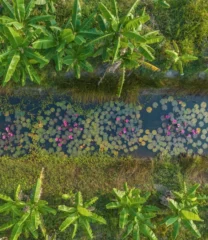
Water lilies thrive in these calm, shallow environments, their rounded leaves resting on the surface while slender flower stalks rise toward the sunlight.
The quiet rhythm of the waterways
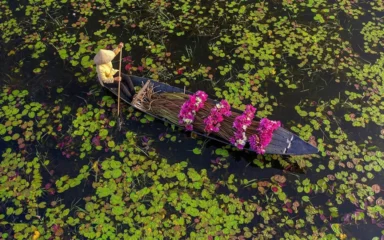
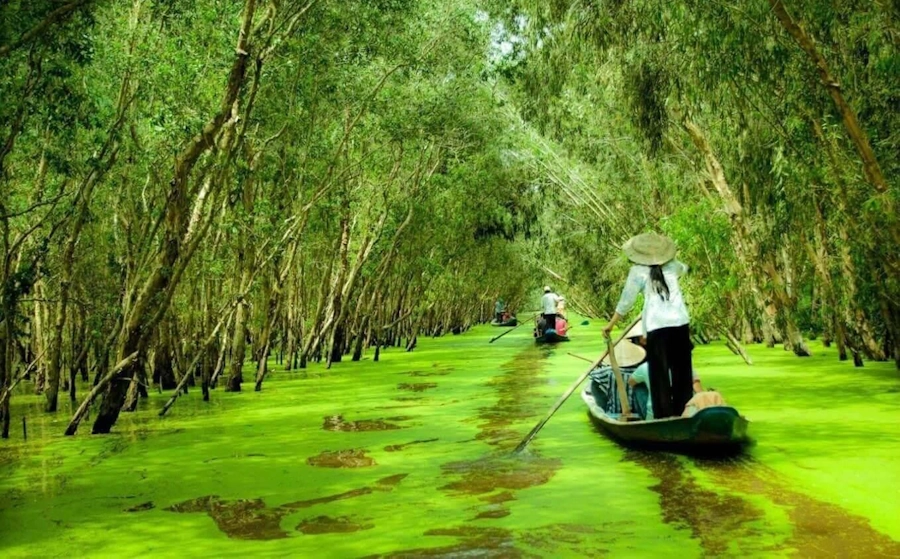
Small wooden boats move through narrow canals, past coconut palms, reeds and riverside homes. Among the aquatic plants, pink and white blossoms appear like scattered brushstrokes across the water.
At dawn, when the air is cooler and the light is soft, these wetlands reveal one of southern Vietnam's most peaceful rural scenes.

LIVELIHOODS & LOCAL TRADITIONS
Its Role in Rural Life
More Than a Beautiful Flower
How an aquatic plant becomes part of everyday life.

Harvesting by Hand
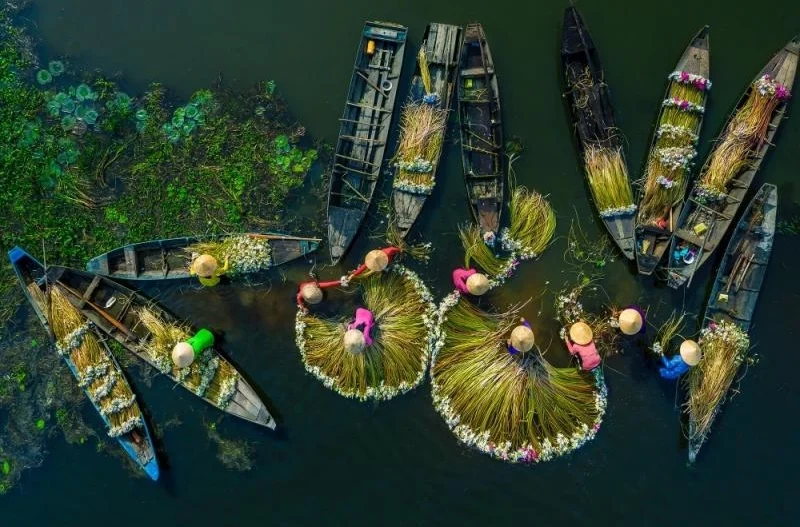
Harvesters travel through shallow wetlands in small boats, gathering long water lily stems by hand. This seasonal activity requires familiarity with water levels, plant growth and the surrounding waterways.

From Wetlands to Markets
Freshly collected stems are cleaned, sorted and bundled before being sold at local markets. For some households, water lilies provide an additional source of seasonal income.

A Taste of the Mekong
The tender stems, known as bông súng, are valued for their crisp texture. They are eaten with fermented fish hotpots, sour soups and other regional dishes, often alongside fresh herbs and vegetables.

Life Beneath the Surface
Water lily leaves and submerged stems contribute to freshwater habitats, providing shelter and surfaces used by small aquatic creatures. These plants are part of the complex ecology of the delta's wetlands.
SEASONS & NATURAL RHYTHMS
The Natural Cycle
Following the Rhythm of the Flood
From rising waters to the seasonal harvest.

01 · MAY–JULY
The Rains Return
Monsoon rainfall replenishes canals, ponds and wetlands. Water lilies grow from submerged rhizomes, sending new leaves and stalks toward the surface as conditions become favorable.

02 · AUGUST–SEPTEMBER
The Wetlands Bloom
In many floodplain areas, expanding waterways support abundant aquatic vegetation. Water lilies spread their floating leaves and produce flowers, creating striking patches of pink and white.

03 · SEPTEMBER–NOVEMBER
The Harvest Season
As water lilies flourish, local harvesters collect mature edible stems for household cooking and markets. Harvest timing depends on plant growth, local demand and access to the wetlands.
04 · DECEMBER–APRIL
The Waters Recede
Floodwater gradually retreats from seasonal floodplains. Water lilies persist in suitable permanent waterways or through their underground rhizomes, ready to grow again when conditions return.

CULTURAL HERITAGE
Culture & Symbolism
The Poetry of Simple Living
An everyday flower that captures the spirit of the countryside.
A symbol of rural simplicity
Unlike the lotus, which carries prominent religious and philosophical symbolism in Vietnam, the water lily is more closely associated with familiar rural landscapes and daily life.
Its presence in canals, ponds and flooded fields evokes the peaceful countryside, the resourcefulness of local communities and the intimate relationship between people and water.
Beauty in ordinary moments
In photographs, paintings and regional imagery, water lily harvesters in traditional áo bà ba clothing and wooden boats have become evocative representations of the Mekong Delta.
These scenes celebrate not grand monuments, but the beauty of ordinary work and the rhythms of the natural world.

ACROSS VIETNAM
Regional Stories
One Flower, Different Landscapes
Explore how water lilies connect with different parts of the country.
Đồng Tháp
The Floodplain Harvest
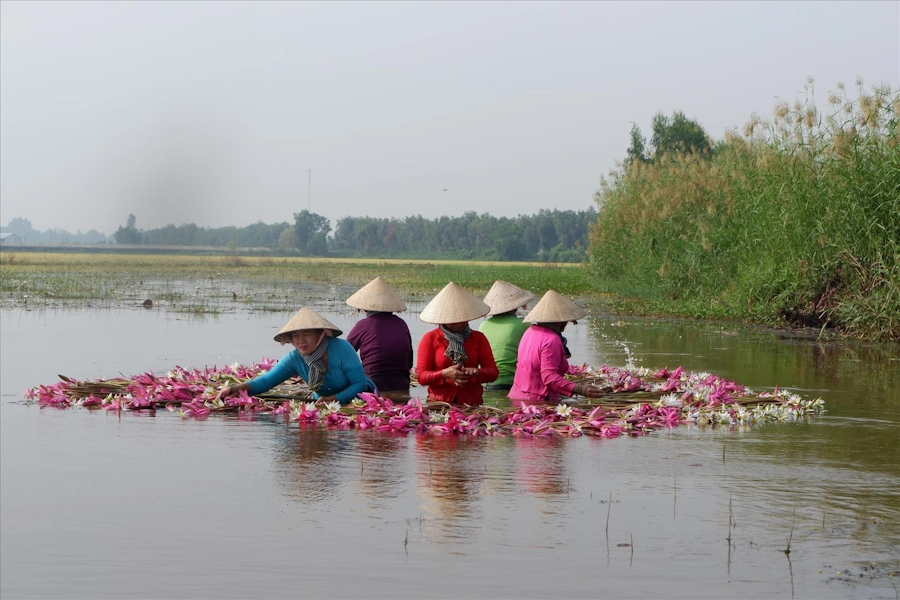
In the Đồng Tháp Mười wetland region, water lily harvesting is closely associated with the annual flood season. Shallow flooded fields, small boats and abundant aquatic plants create some of the most recognizable water lily scenes in Vietnam.
An Giang
A Cuisine Shaped by Floods
In An Giang, water lily stems feature in the region's freshwater cuisine, particularly alongside fermented fish dishes and seasonal vegetables. The annual flood period brings distinctive ingredients to local tables.

Northern Vietnam
Flowers of Village Ponds
Water lilies also grow in ponds and lakes across northern Vietnam. Here, they are often appreciated as part of the village landscape or cultivated as ornamental aquatic flowers, rather than being associated primarily with large-scale seasonal harvesting.
LITTLE-KNOWN FACTS
Did You Know?
Surprising Secrets of the Water Lily
Stems That Follow the Rising Water
Water lily stalks can lengthen as water levels increase, helping leaves and flowers remain near the surface. In flooded fields, harvesters sometimes collect remarkably long stems.
Some Water Lilies Bloom at Night
Not all water lilies open in the morning. Certain tropical varieties bloom at night, including those locally nicknamed bông súng ma, or ghost water lilies.
A Water Lily Is Not a Lotus
Although often confused, they are botanically different. Water lily leaves generally float on the water's surface, while lotus leaves often rise high above it. In Vietnamese, they are called hoa súng and hoa sen, respectively.
The Stem Is Full of Air
Water lily stalks contain internal air spaces that help the aquatic plant exchange gases. These give the edible stems their light, porous structure and distinctive crisp texture.
A Flower Celebrated in a Folk Verse
A traditional verse invites anyone craving bông súng mắm kho—water lily stems with fermented fish braise—to visit Đồng Tháp. The pairing is a celebrated expression of the region's culinary identity.
SHARE YOUR JOURNEY
CHANGE THE WAY WE ENJOY