Heritage and Landmark

Discover Bến Thành Market

THE BEATING HEART OF SAIGON

The present Ben Thanh Market opened in 1914. More than a market, it is both an architectural landmark and a living trading place where generations of Saigonese have met, shopped and shared their stories. Best approached with curiosity and respect, it offers an authentic glimpse into the city’s vibrant culture and everyday life.

SINCE 1914

HCMC

FOOD & CRAFTS

LIVING LANDMARK

PLAN YOUR VISIT

Practical Info for your trip

THE STORY

The land and its past

WHAT TO SEE

Things to do

EXPLORE AROUND

Beyond the Landmark

AT A GLANCE

ESSENTIAL FACTS


Everything you need to know before planning your visit.

CENTRAL HCMC

LOCATION

1914

ESTABLISHED

PUBLIC MARKET

TYPE

45-90 MIN

VISIT DURATION

FREE

ENTRANCE

COLONIAL ERA

ARCHITECTURE

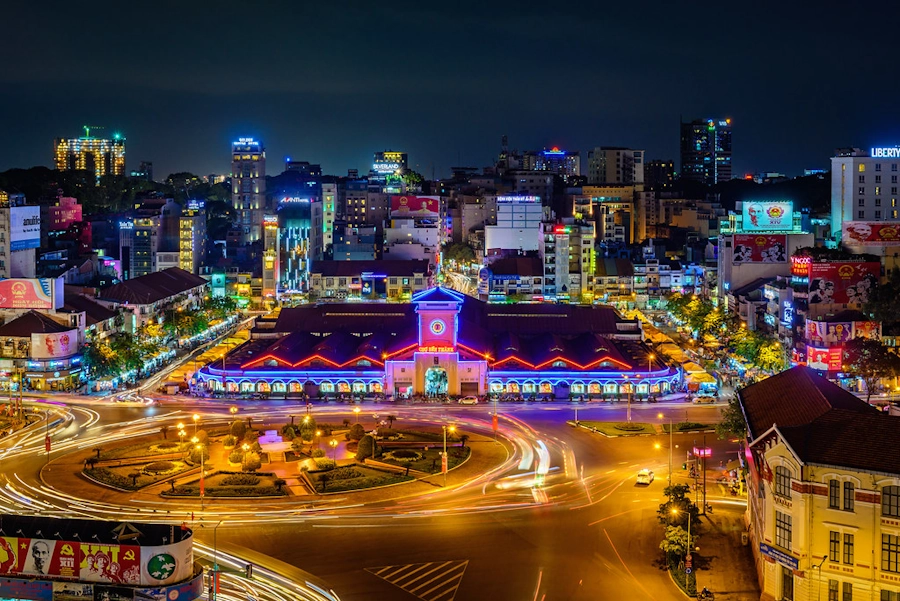
Ben Thanh Market by night

PRACTICAL TRAVEL GUIDE

Plan Your Visit


Everything you need to know to plan your visit.

Best time

Morning, ideally 7:00–9:00 AM, for a lively atmosphere before the busiest hours

Opening hours

Generally around 6:00 AM–6:00 PM; verify locally

Address

Ben Thanh Market, central Ho Chi Minh City, Vietnam

Getting there

Metro Line 1 to Ben Thanh Station, taxi, or walking

Duration

45–90 minutes

Accessibility

Some aisles may be narrow or crowded

A JOURNEY THROUGH TIME

The Story Behind

BEN THANH MARKET

From a riverside trading place to a Saigon landmark


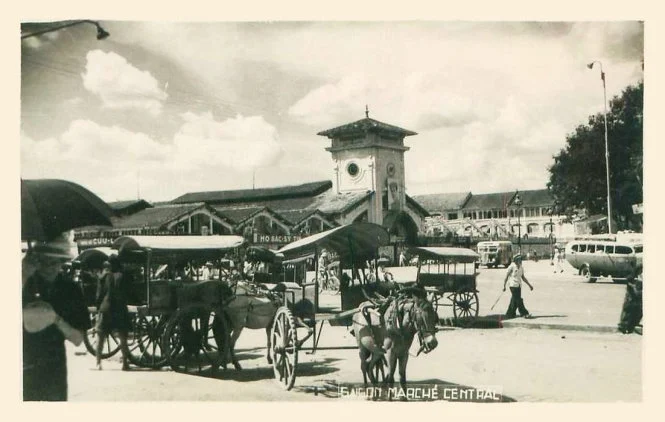
Long before its famous clock tower became a symbol of Saigon, Ben Thanh was a bustling trading place near the city's old citadel and waterways. Merchants gathered here to exchange agricultural produce, everyday goods, and merchandise arriving by boat.

As Saigon expanded under French colonial rule, the original market could no longer accommodate the city's growing commercial activity. A new market was constructed on reclaimed marshland between 1912 and 1914.

Its grand opening, held from March 28 to 30, 1914, attracted enormous crowds and marked the arrival of a new commercial landmark.

Throughout wars, political changes, and rapid urban development, Ben Thanh continued to evolve. Major renovations in 1985 modernized its interior while preserving its distinctive frontage and clock tower.

Today, the market remains a living connection between Saigon's trading heritage and the modern metropolis surrounding it.

Tab 1

Before 1859 ~ Trading activity around the old citadel and river landing

Tab 2

1912–1914 ~ Construction of the present market

Tab 2

March 1914 ~ Three-day opening celebration

Tab 2

1985 ~ Major renovation of the market

Tab 2

2023 ~ Façade repainting and decorative lighting improvements
An unmistakable silhouette

ARCHITECTURE & DESIGN


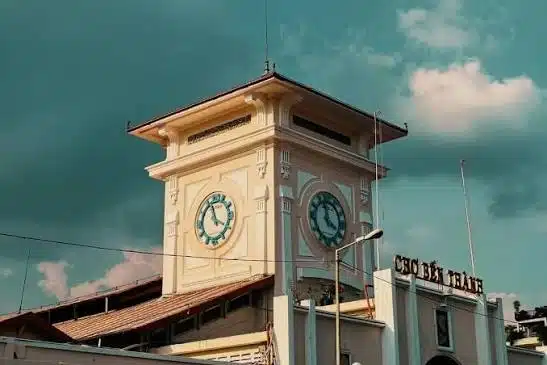
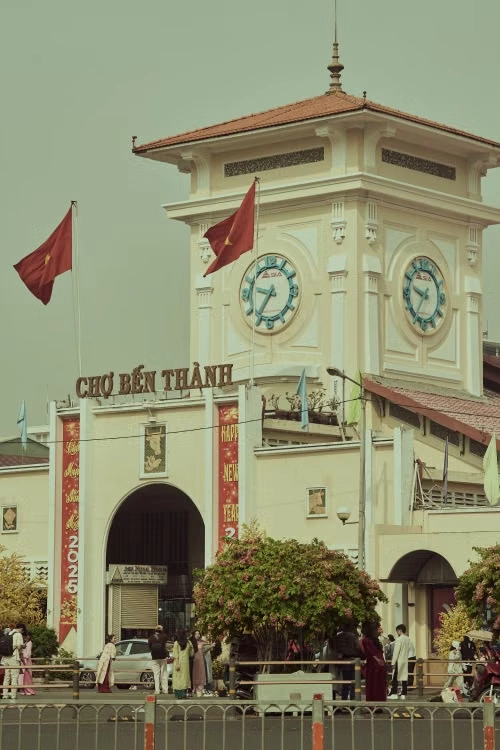
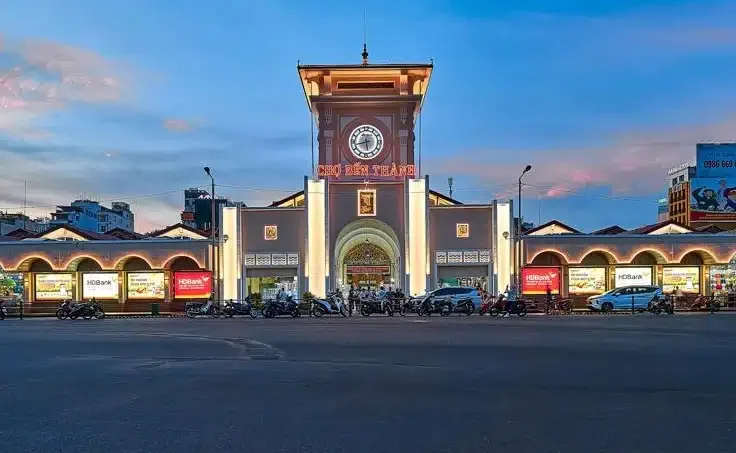
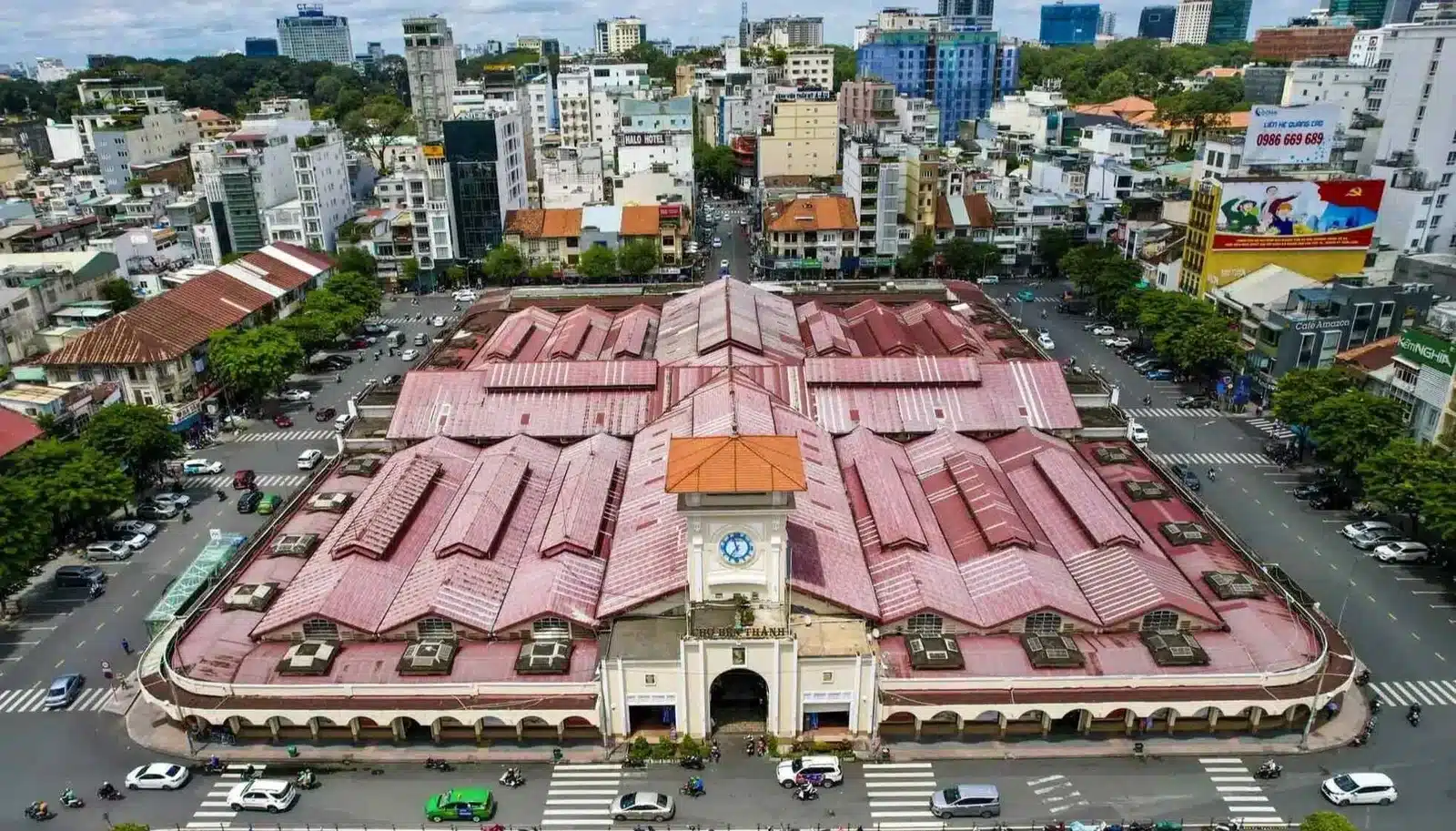
Ben Thanh Market's architecture reflects the practical elegance of an early twentieth-century urban marketplace. Its most recognizable feature is the clock tower above the southern entrance, whose distinctive silhouette has become inseparable from the image of Saigon.

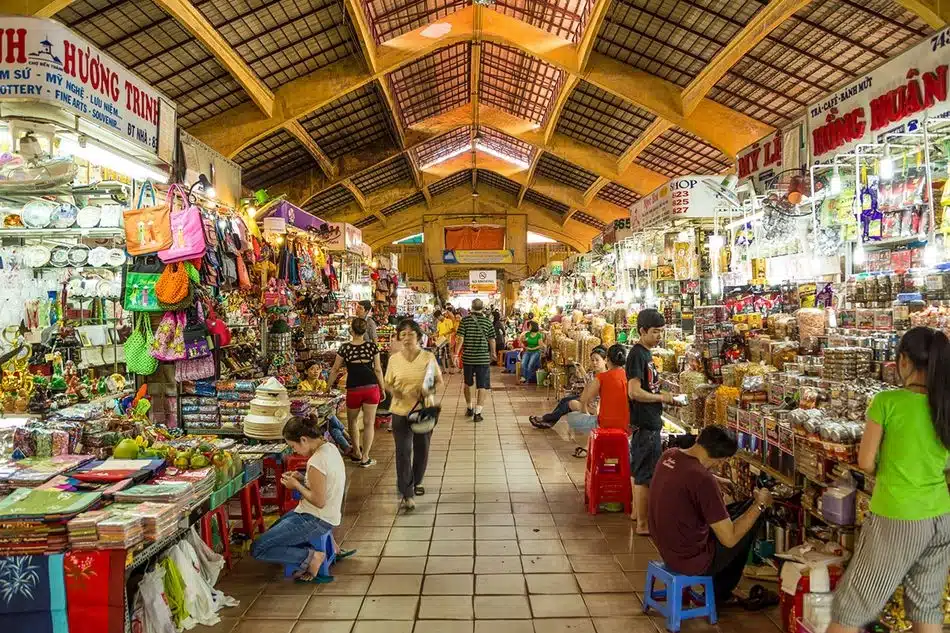
Behind the historic façade, spacious covered halls and interconnected aisles accommodate hundreds of merchants. The building's four principal gateways connect the market with the surrounding streets, while its high roof and ventilation openings help air circulate in the tropical climate.

Four Main Gateways

Entrances connect the market to the surrounding commercial streets.

Central Clock Tower

A defining architectural symbol of Saigon.

Covered Market Halls

Large interior spaces accommodate stalls and pedestrian aisles.

Natural Ventilation

A high roof and openings help manage tropical heat.

A MEANINGFUL LANDMARK

Culture, Legends & Symbolism

More than a market


The name Ben Thanh combines two Vietnamese words: bến, meaning wharf or landing place, and thành, meaning citadel. It recalls the market's origins near a river landing serving the former Gia Dinh Citadel.

Today, Ben Thanh represents much more than commerce. Its clock tower is a symbol of Saigon's identity, while the activity inside reflects the city's long tradition of trade, cultural exchange, and entrepreneurship.

Generations of merchants, residents, and visitors have contributed to its character, making it a place where the city's past and present meet.

TRADE

A meeting place for merchants and cultures.

TIME

A landmark linking generations of Saigon life.

COMMUNITY

A shared space for residents and visitors.

GO BEYOND THE FAMOUS SIGHTS

What to See & Discover


Explore the vibrant heart of Ho Chi Minh City at Ben Thanh Market, from its iconic clock tower and bustling stalls to traditional Vietnamese crafts, local delicacies, and the lively atmosphere of Saigon’s most famous marketplace.

ORGANIZE YOUR DAY

Experience the Landmark


A walk through Saigon's most famous market

The best way to experience Ben Thanh is to wander without rushing. Follow this simple route to discover the market's architecture, colours, flavours, and everyday atmosphere.

STOP 1

Begin at the Clock Tower

Start at the southern entrance, admire the historic façade, and capture a photograph of the market's most famous landmark.

STOP 2

Explore the Covered Aisles

Walk through the different market sections, observing merchants, colourful displays, and the lively rhythm of local trade.

STOP 3

Pause for a Vietnamese Coffee

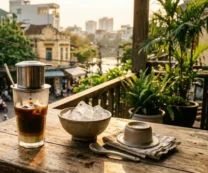
Enjoy a refreshing cà phê sữa đá and take a moment to appreciate the atmosphere.

STOP 4

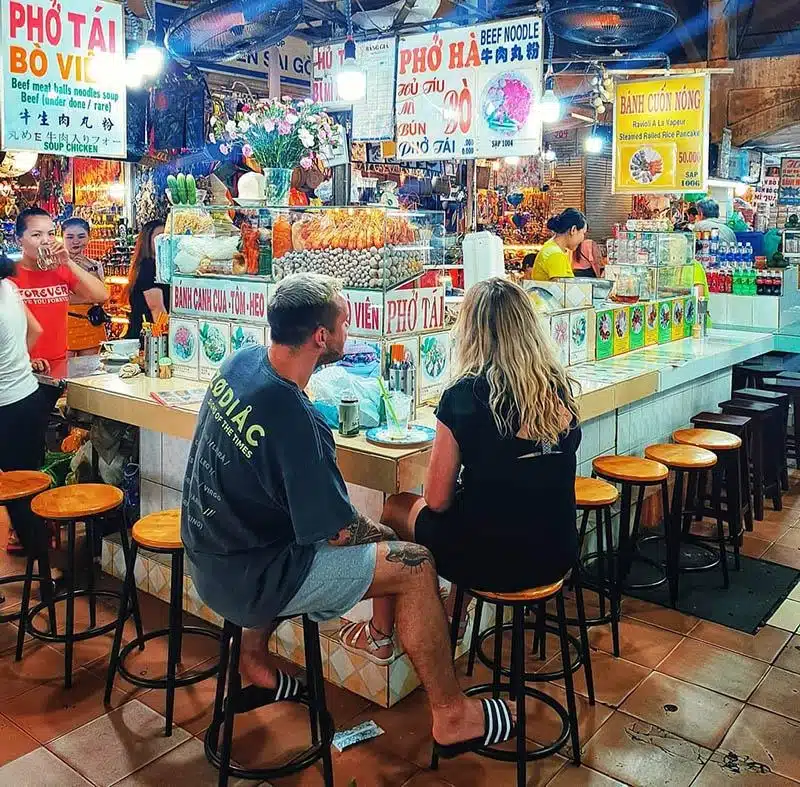
Taste Local Specialties

Stop for a traditional Vietnamese meal or snack and discover the flavours of southern Vietnam.

WHAT TO SEE AROUND

Beyond the Landmark

At the crossroads of old and new Saigon


Ben Thanh Market stands at the centre of one of Ho Chi Minh City's most dynamic neighbourhoods. Around it, historic buildings, modern shops, cafés, and busy streets create a lively environment where Saigon's past meets its contemporary identity.

Just a short distance away, visitors can continue discovering the city's architectural heritage, vibrant commercial streets, and public spaces.

Saigon Central Post Office

A historic landmark celebrated for its grand architecture and distinctive interior.

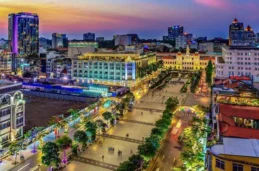
Nguyen Hue Walking Street

A lively pedestrian boulevard lined with historic façades and modern buildings.

Independence Palace

A landmark closely associated with Vietnam's twentieth-century history.

Opera House

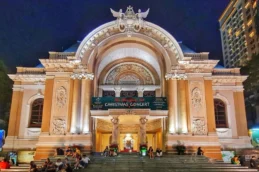
Ho Chi Minh City Opera House is an elegant French colonial landmark, celebrated for its ornate architecture and vibrant performing arts scene.

SHARE YOUR JOURNEY

CHANGE THE WAY WE ENJOY

#BENTHANH

×
×

お買い物カゴ