

Nature and Rural Life
Rice Duck Farming in Vietnam
WHERE RICE GROWS AND DUCKS ROAM
For generations, Vietnamese farmers have herded ducks into rice paddies to feed on insects, snails and leftover grains. This practical partnership helps control pests, returns nutrients to the soil through duck manure, and provides families with eggs and meat—bringing added value to every harvest.
PEST CONTROL
NUTRIENTS RETURNED
PADDIES LIFE
NATURAL FARMING
ESSENTIAL FACTS
Understanding Rice Duck Farming
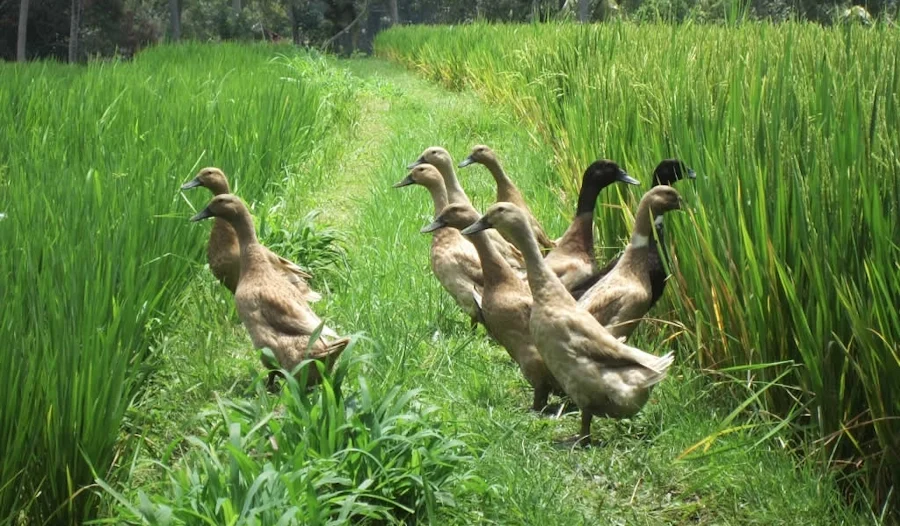

LANDSCAPES & EVERYDAY BEAUTY
A Familiar Scene of Vietnam
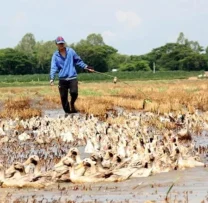
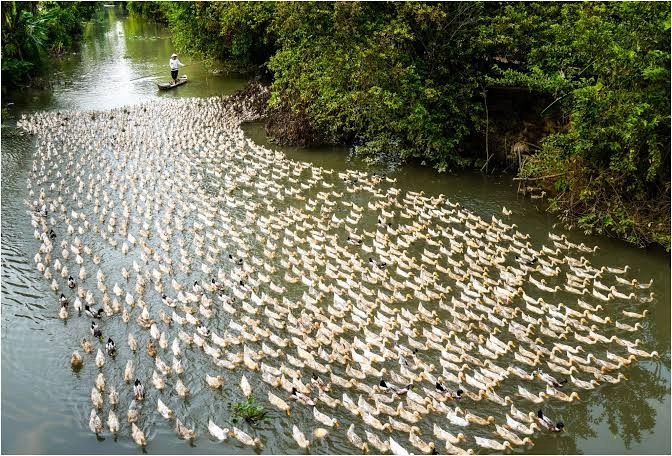
A Sea of Ducks Among the Rice Fields
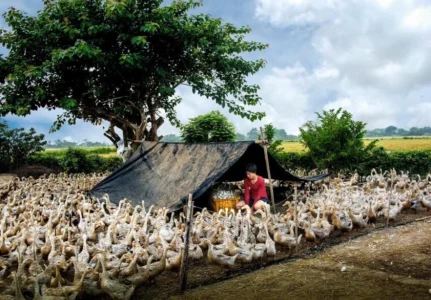
Along the winding roads of Vietnam's countryside, an apparently quiet rice field can suddenly come alive with hundreds of ducks. Their gentle quacking, rhythmic movements and white feathers contrast beautifully with the surrounding landscape.
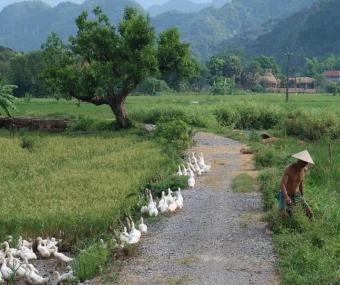
Farmers guide their flocks along narrow earthen paths, through irrigation canals and across harvested fields. Sometimes, the ducks even interrupt traffic as they move from one feeding ground to another.
Known locally as vịt chạy đồng, these free-grazing ducks are particularly characteristic of the southern countryside, where extensive rice fields and abundant waterways provide ideal conditions for their movement.
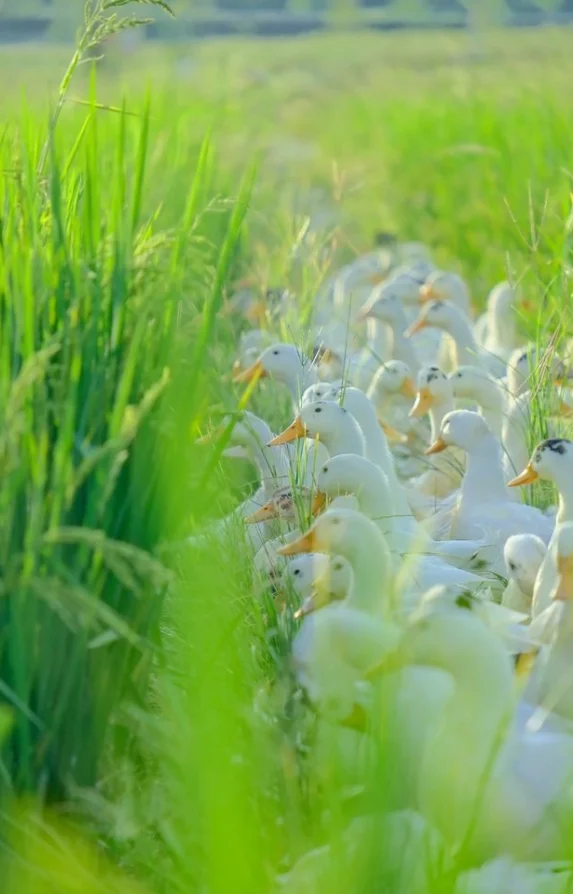
LIVELIHOODS & LOCAL TRADITIONS
Its Role in Rural Life
When Ducks Become Farmers' Allies
Rice and ducks share a surprisingly complementary relationship. While traditional duck herders make use of fields after the rice harvest, integrated farming systems introduce young ducks among growing rice plants. When carefully managed, this partnership can benefit both crops and animals.
These benefits have been documented in Vietnamese agricultural research, although their effectiveness depends on flock size, timing and farming practices.
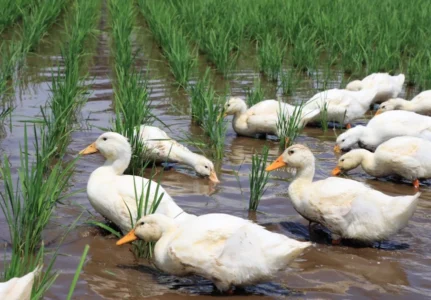
Natural Pest Control
Ducks feed on insects, snails and other small organisms that can damage rice plants, helping farmers reduce their dependence on pesticides.

Natural Weed Management
As they explore the shallow water, ducks consume young weeds and disturb their growth, reducing competition with rice plants.
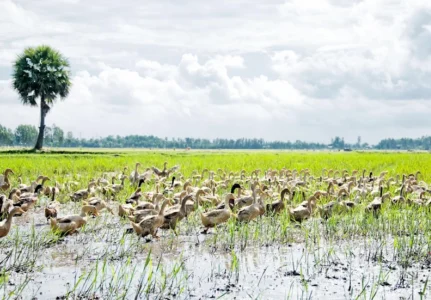
Healthier Rice Fields
Duck droppings return nutrients to the soil, while their movements stir the shallow water and soil.
Additional Income
Raising ducks alongside rice gives farming families additional products to sell, providing an alternative source of income beyond the rice harvest.
SEASONS & NATURAL RHYTHMS
The Natural Cycle
Following the Rhythm of the Rice Fields
From the first green shoots to the golden harvest, the movements of ducks are closely linked to the agricultural calendar.

STAGE 1
Preparing & Planting
Farmers prepare the soil, flood their fields and establish the young rice plants. Ducks are generally kept away while the seedlings remain fragile.
STAGE 2
Growing Together
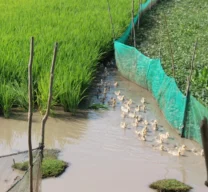
In integrated rice–duck systems, young ducks are introduced once the plants are sufficiently established.
STAGE 3
Rice Reaches Maturity
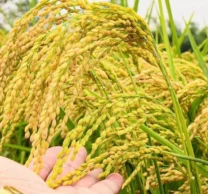
Ducks are removed before the developing grain becomes vulnerable to feeding or damage, allowing the rice to ripen undisturbed.
STAGE 4
The Post-Harvest Feast
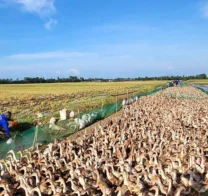
After harvesting, larger flocks enter the fields to search for fallen grains, snails and other available food.
STAGE 5
Moving to New Fields
Mobile duck herders follow successive harvests, sometimes travelling considerable distances before reaching their next feeding ground.

CULTURAL HERITAGE
Culture & Symbolism
From the Rice Fields to Vietnamese Everyday Life
For generations, ducks have been part of the Vietnamese village landscape, domestic economy and culinary traditions. Their presence extends far beyond the farm, appearing in childhood memories, popular songs and family meals.
The Art of Duck Herding
Guiding an entire flock requires patience, experience and a thorough knowledge of the local landscape. Herders learn to anticipate the movements of their animals and adapt to changing agricultural conditions.

A Place in Vietnamese Cuisine
Duck is enjoyed throughout Vietnam in dishes such as cháo vịt (duck rice porridge), gỏi vịt (duck salad) and vịt quay (roast duck). These familiar dishes connect agricultural traditions with everyday dining.
A Childhood Familiarity
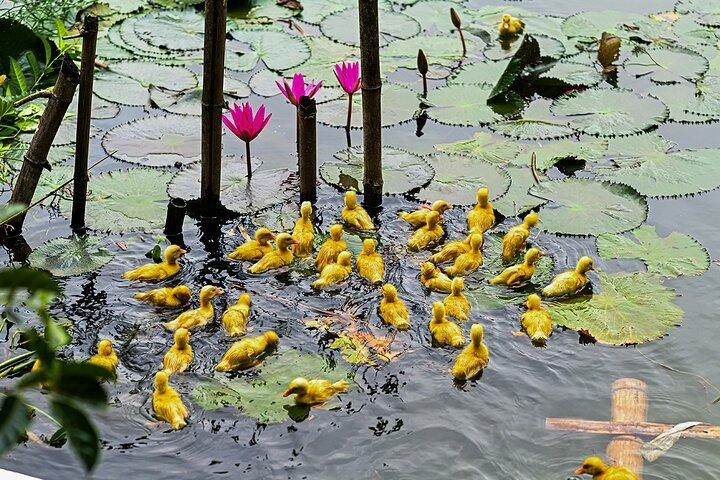
Ducks also feature in Vietnamese children's songs, including the widely known Một Con Vịt (One Duck). Its playful imitation of a duck's movements and sounds is familiar to generations of Vietnamese children.
EXPLORE RURAL VIETNAM
Where to Experience It
In Search of Vietnam's Duck-Filled Rice Fields
Venture beyond the cities to discover the agricultural landscapes where this tradition remains visible.
An Giang
Southern Vietnam
The expansive rice plains around Tri Tôn and Thoại Sơn offer beautiful rural scenery and opportunities to observe agricultural life.

Cần Thơ Countryside
Southern Vietnam
Beyond the floating markets, agricultural areas around Cờ Đỏ offer a glimpse into the daily routines of Mekong Delta farming communities.
Đồng Tháp
Southern Vietnam
A landscape of wetlands, agricultural canals and rice fields provides a fascinating setting for exploring the relationship between water and farming.

Ninh Bình
Northern Vietnam
Discover smaller-scale countryside scenes where village ponds, rice paddies and limestone mountains form a spectacular natural backdrop.
LITTLE-KNOWN FACTS
Did You Know?
The Surprising World of Rice Field Ducks
Behind this familiar countryside scene lies a fascinating world of animal behaviour and agricultural ingenuity.
Ducks Travel by Boat
In the Mekong Delta, farmers sometimes transport entire flocks by boat or truck to reach new feeding grounds.
Vietnam Has Its Own Native Ducks
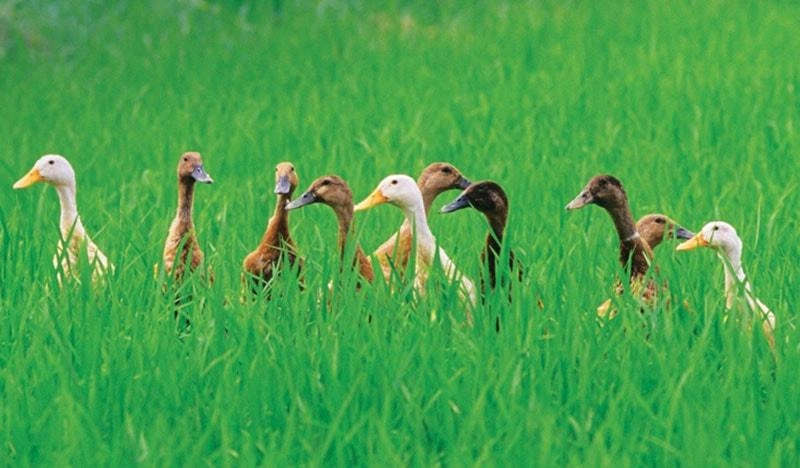
The vịt Cỏ is a traditional Vietnamese duck breed valued for its active foraging behaviour and suitability for small-scale farming.
Thousands in a Single Flock
Commercial free-grazing flocks in southern Vietnam can contain several thousand ducks under the supervision of their herders.
Up to Three Harvests a Year
In parts of the Mekong Delta, rice is harvested two or three times annually, creating successive feeding opportunities for mobile duck flocks.
SHARE YOUR JOURNEY
CHANGE THE WAY WE ENJOY