Heritage and Landmark

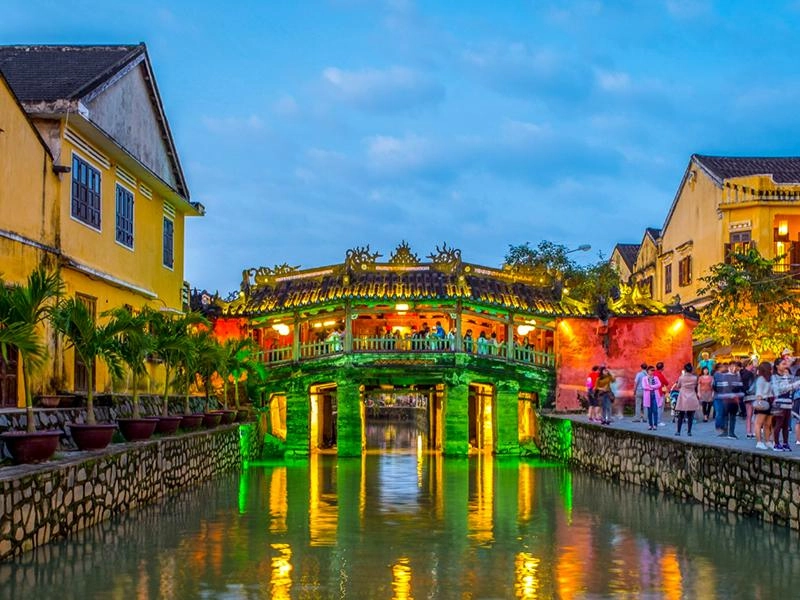
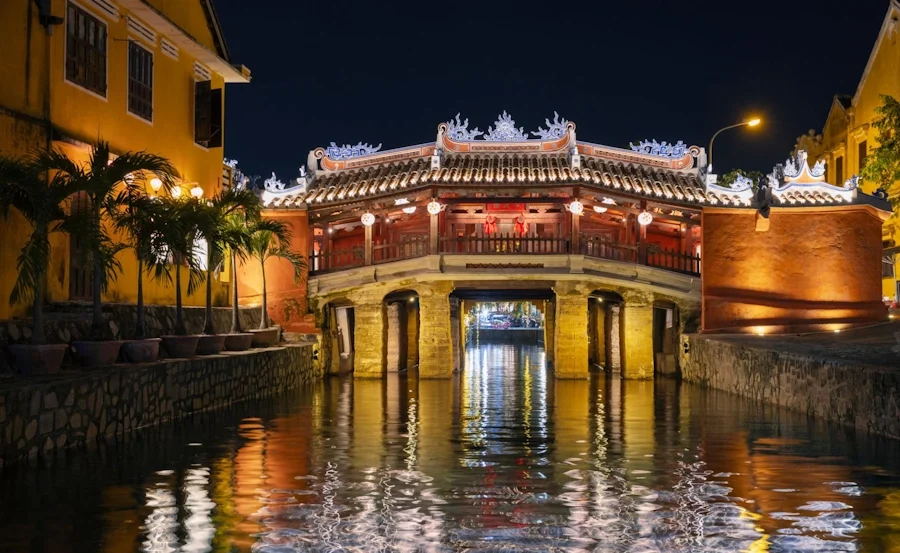
Hoi An Japanese Covered Bridge

HỘI AN OLD TOWN

Once a thriving international trading port, Hội An blends Vietnamese, Japanese, Chinese and European influences into a timeless town of lantern-lit streets, historic architecture and living traditions.

UNESCO WORLD

HERITAGE

16th – 17th

CENTURY TRADE

QUẢNG NAM

CENTRAL VIETNAM

GOLDEN HOUR

DAWN & DUSK

PLAN YOUR VISIT

Practical Info for your trip

THE STORY

The land and its past

WHAT TO SEE

Things to do

EXPLORE AROUND

Beyond the Landmark

AT A GLANCE

ESSENTIAL FACTS


Everything you need to know before planning your visit.

HOI AN ANCIENT TOWN

LOCATION

167th CENTURY

CONSTRUCTION

TIMBER BRIDGE

TYPE

~18 METERS

LENGTH

FREE

ENTRANCE

JAPANESE, CHINESE, VIETNAMESE INFLUENCE

ARCHITECTURE

PRACTICAL TRAVEL GUIDE

Plan Your Visit


Everything you need to know to plan your visit.

LOCATION

Trần Phú Street, Hoi An Ancient Town

Getting there

On foot from the Old Town

BEST TIME

Early morning or evening

ADMISSION

Bridge is admission free, however the shrine requires Ancient Town sightseeing ticket

Duration

15–30 minutes

Accessibility

Historic structure with uneven surfaces; access may be limited

A JOURNEY THROUGH TIME

The Story Behind

Japanese Covered Bridge

Four Centuries of Cultural Exchange


During the 16th and 17th centuries, Hoi An was one of Southeast Asia's most prosperous trading ports. Japanese, Chinese, and European merchants gathered along its bustling waterfront, exchanging silk, ceramics, spices, and precious goods.

Around the beginning of the 17th century, Japanese merchants constructed a covered wooden bridge across a small waterway, connecting the Japanese and Chinese trading quarters. The bridge soon became more than a practical crossing: it represented cooperation and friendship between distant cultures.

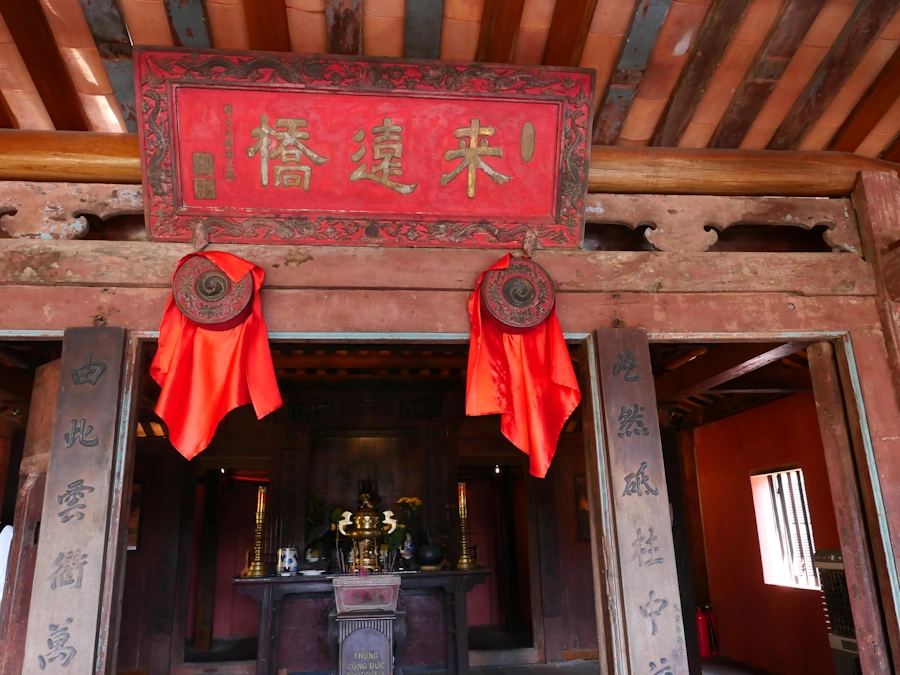
In 1719, Lord Nguyễn Phúc Chu named it Lai Viễn Kiều, meaning "Bridge Welcoming Guests from Afar," celebrating Hoi An's tradition of welcoming international visitors.

Despite centuries of floods, storms, and historical changes, the bridge has survived through successive restorations. Today, it remains the most recognisable landmark of Hoi An's remarkable multicultural past.

Tab 1

Early 1600s ~ Japanese Merchant Settlement.

Japanese merchants establish a covered bridge connecting Hoi An's trading communities.

Tab 2

1719 ~ A Name of Friendship

Lord Nguyễn Phúc Chu names the landmark Lai Viễn Kiều, celebrating visitors arriving from afar.

Tab 2

18th–20th Centuries Preservation

Successive generations repair and maintain the bridge through floods, storms, and structural deterioration.

Tab 2

1999 ~ UNESCO Recognition

Hoi An Ancient Town, including the Japanese Covered Bridge, becomes a UNESCO World Heritage Site.

Tab 2

2024 ~ A new chapter

A major conservation project is completed, safeguarding the landmark for future generations.

An unmistakable silhouette

ARCHITECTURE & DESIGN

Where Three Architectural Traditions Meet


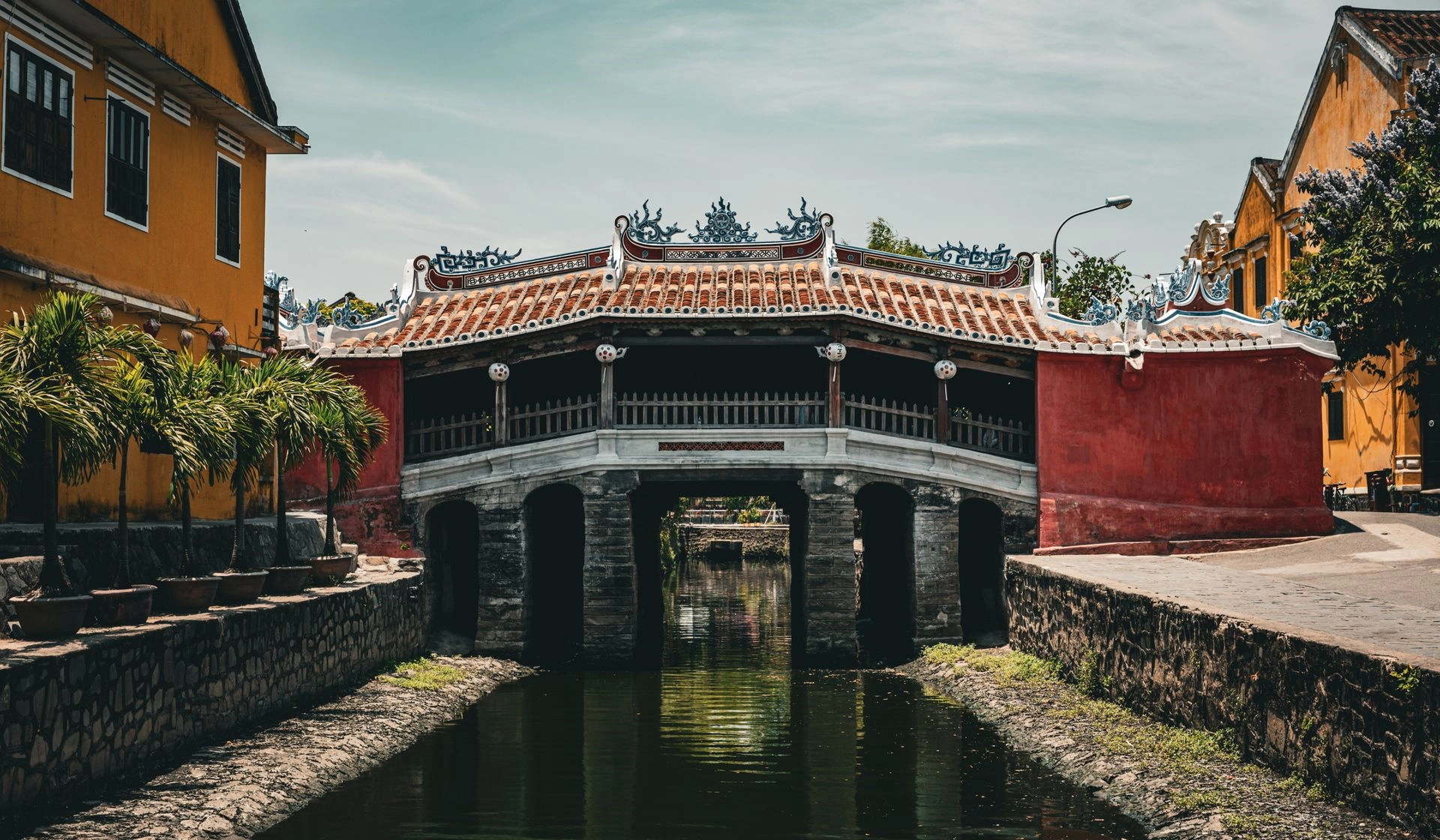
The Japanese Covered Bridge is a unique architectural fusion, combining Japanese structural influences, Chinese spiritual traditions, and Vietnamese craftsmanship.

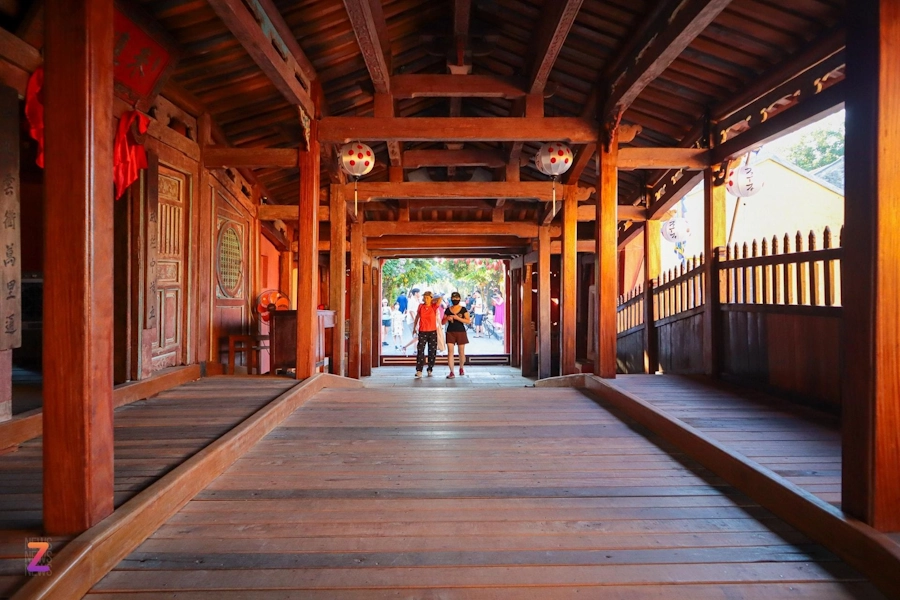
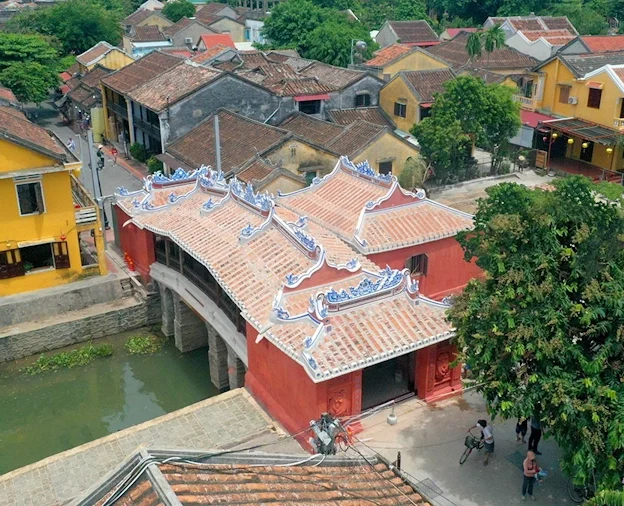
Its 18-metre wooden structure rests on stone supports, while a gently curved roof covered with traditional yin-yang tiles protects the passage below. Intricate carvings, decorative panels, and weathered timber reflect the craftsmanship of generations of artisans.

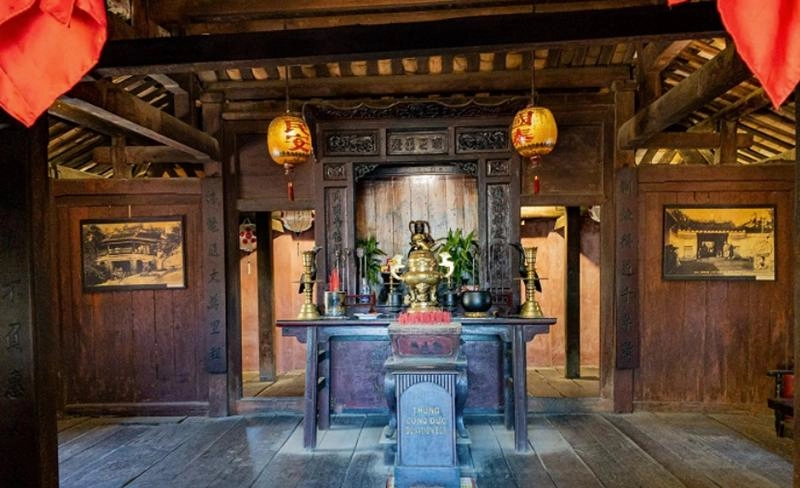
Unlike most bridges, Chùa Cầu also contains a small shrine dedicated to Bắc Đế Trấn Vũ, a protective deity associated with controlling natural forces.

Curved Tiled Roof

A graceful roofline inspired by traditional East Asian architecture.

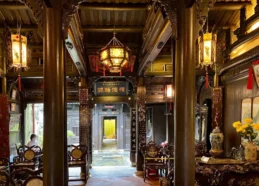
Wooden Structure

Timber beams and traditional joinery supporting the historic passage.

Sacred Shrine

A sanctuary dedicated to the protective deity Bắc Đế Trấn Vũ.

Guardian Statues

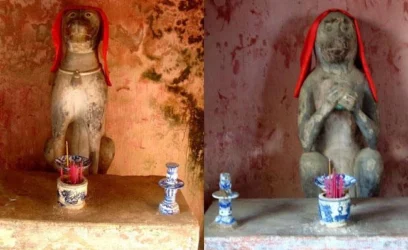
Symbolic monkeys and dogs watching over the bridge's entrances.

Culture, Legends & Symbolism

The Bridge That Tamed a Mythical Monster


According to Japanese folklore, a giant mythical catfish named Namazu lived beneath the earth, stretching across distant lands. Its movements were believed to cause earthquakes and natural disasters.

Legend tells that the Japanese Covered Bridge was constructed like a sacred sword, pinning down the creature and preventing it from shaking the earth.

The monkey and dog statues at opposite ends of the bridge are also surrounded by mystery. Some traditions associate them with the years of construction, while others interpret them as spiritual guardians protecting travellers.

Beyond its legends, the bridge symbolises the lasting friendship between Vietnam and Japan and the harmonious meeting of cultures that shaped Hoi An's identity.

GO BEYOND THE FAMOUS SIGHTS

What to See & Discover


From its legendary animal guardians to its centuries-old wooden craftsmanship, every detail of the Japanese Covered Bridge reveals a fascinating chapter of Hoi An's multicultural heritage.

Secrets of the Japanese Covered Bridge

Did You Know?


Uncover fascinating legends, surprising facts, and hidden stories behind Hoi An’s most iconic landmark.

A Bridge on a Banknote

The Japanese Covered Bridge appears on Vietnam's 20,000 VND polymer banknote.

A Shrine, Not a Pagoda

Despite its Vietnamese name Chùa Cầu, the bridge's shrine is dedicated to a protective deity rather than Buddha.

A Legendary Catfish

Japanese folklore connects the bridge to Namazu, a mythical creature believed to cause earthquakes.

Over 400 Years of History

The bridge has survived centuries of storms and numerous restorations, most recently in 2024.

DISCOVER MORE OF HOI AN

Beyond the Landmark

Nearby Places to Explore


Beyond the Japanese Covered Bridge, discover the historic merchant houses, colourful streets, and riverside traditions that make Hoi An one of Vietnam's most enchanting destinations.

Tan Ky Old House

A beautifully preserved merchant residence showcasing the architectural fusion of Vietnamese, Chinese, and Japanese traditions.

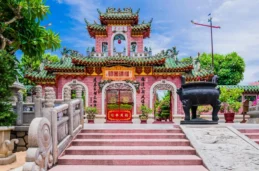
Fujian Assembly Hall

An ornate Chinese assembly hall celebrated for its elaborate carvings, colourful courtyards, and spiritual heritage.

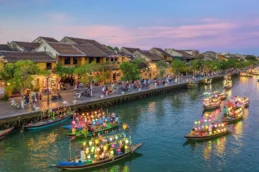
Hoai River

A charming riverside setting where traditional boats and glowing lanterns create Hoi An's unforgettable evening atmosphere.

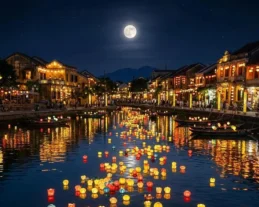
Hoi An Full Moon Lantern Festival

Every lunar month, Hoi An's Ancient Town transforms into a magical celebration of glowing lanterns, floating candles, traditional performances, and centuries-old customs beneath the moonlight.

SHARE YOUR JOURNEY

CHANGE THE WAY WE ENJOY

#CHUACAU

×
×

Cart